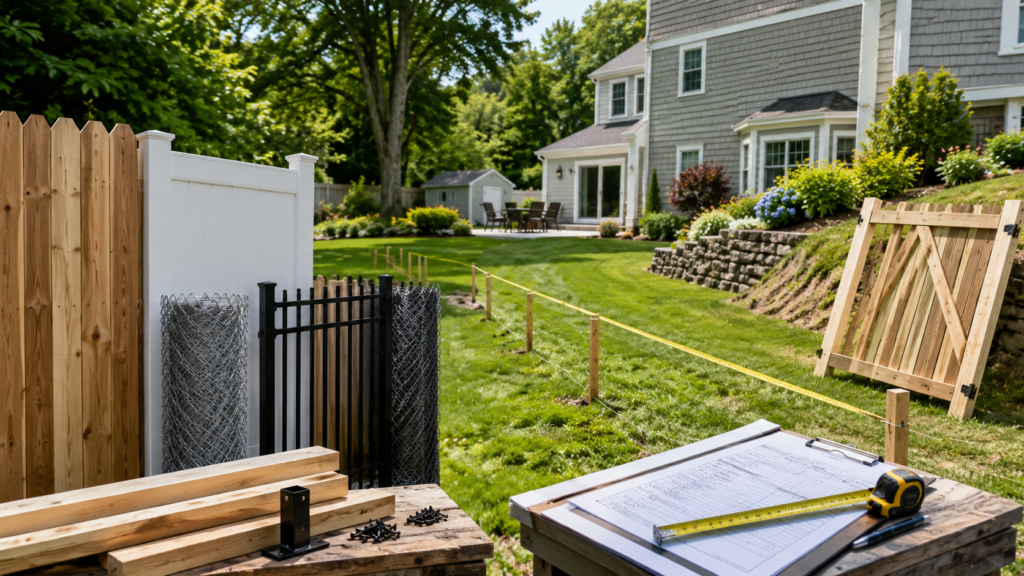
Fence installation cost in Massachusetts and Rhode Island depends on the material, fence length, height, gates, property conditions, old fence removal, access, and project type. A small chain link fence for a side yard will not cost the same as a full vinyl privacy fence, aluminum pool fence, or commercial security fence.
The most accurate price comes from a property-specific estimate. Still, knowing what affects the cost can help you compare quotes, choose the right material, and avoid surprises before the project starts.
Key Takeaways
- Fence cost depends heavily on material, linear footage, height, gates, and site conditions.
- Privacy fences usually cost more than simple boundary fences because they use more material.
- Chain link is often a practical option for large yards, pets, and commercial properties.
- Vinyl, wood, aluminum, and ornamental fences all have different upfront and maintenance considerations.
- Sloped yards, old fence removal, difficult access, and custom gates can increase the final quote.
- The most accurate fence price comes from an on-site estimate, not a generic online average.
Why Fence Installation Costs Vary So Much
Fence quotes are not one-size-fits-all. Two homes can choose the same fence material and still receive different prices because the properties are different.
The biggest reason fence installation costs vary is that every project has a different layout, purpose, and installation condition. A flat backyard with easy access is usually easier to work on than a sloped yard with trees, rocks, tight side access, or an old fence that needs to be removed.
In Massachusetts and Rhode Island, many properties also have older homes, mature landscaping, uneven yards, stone, wooded areas, and tight lot lines. These details can affect labor, equipment access, layout planning, and installation time.
1. Fence Material
Fence material is one of the biggest cost factors. Each material has a different price, installation process, appearance, and maintenance need.
Chain Link Fence
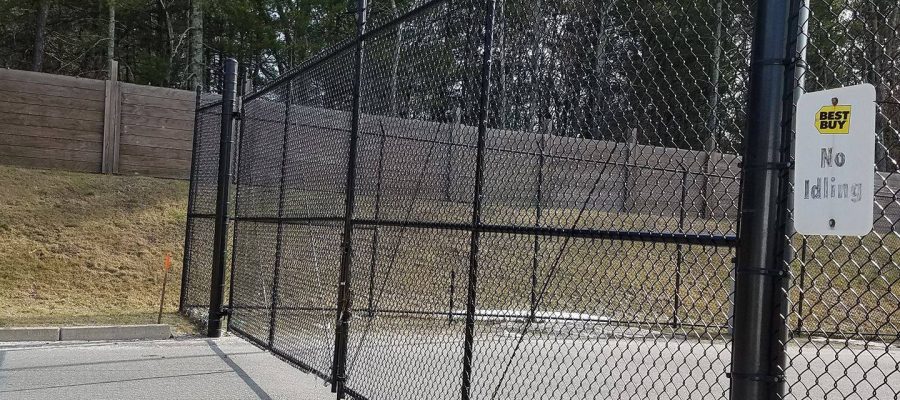
Chain link fencing is often one of the more practical and cost-effective options. It is commonly used for pets, large yards, commercial properties, utility areas, and temporary boundaries.
A basic galvanized chain link fence may cost less than coated chain link, privacy slats, taller fence heights, or custom gate setups.
Chain link is a good fit when you need:
- A functional boundary
- Pet containment
- Visibility
- A large fenced area
- Commercial or utility fencing
- A practical budget-friendly option
Wood Fence
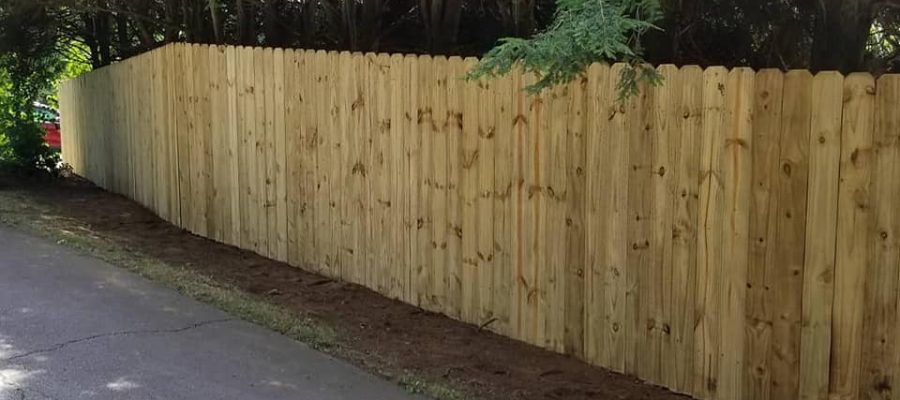
Wood fencing is popular for privacy and a traditional look. It works well for backyards, side yards, and homes where privacy is the main goal.
The cost of a wood fence depends on the wood type, fence height, post spacing, gate count, and style. A simple stockade fence will not cost the same as a custom board-on-board fence or a taller privacy fence.
Wood can be a strong choice for privacy, but homeowners should also consider maintenance. Staining, sealing, cleaning, and occasional repairs can affect the long-term cost.
Vinyl / PVC Fence
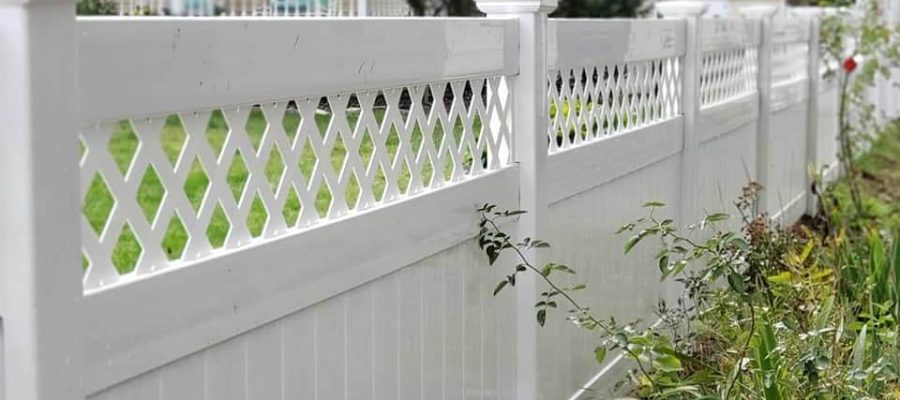
Vinyl or PVC fencing is often chosen by homeowners who want privacy with less maintenance than wood. It gives a clean, finished look and does not need painting or staining.
Vinyl fence cost can vary based on panel style, height, color, gates, layout, and slope adjustments. A full vinyl privacy fence usually costs more than a basic boundary fence because it uses larger panels and requires careful alignment.
Vinyl is often a good fit for:
- Privacy
- Clean curb appeal
- Backyards with kids or pets
- Low-maintenance fencing
- Homeowners who do not want to stain or paint
Aluminum Fence
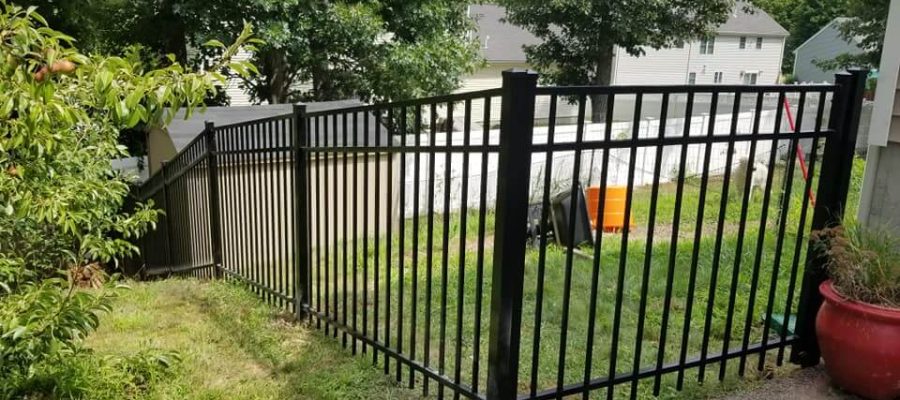
Aluminum fencing is often used for pool areas, front yards, decorative boundaries, and properties where open visibility matters. It gives a clean, attractive look without fully blocking the view.
Cost depends on fence height, style, gate placement, property slope, and layout. Aluminum is usually not the best option for full backyard privacy, but it can be a good choice for curb appeal, pool areas, and defined property lines.
Ornamental Steel or Wrought Iron-Style Fence
Ornamental steel or wrought iron-style fencing is often used for security, decorative entry areas, commercial properties, and homes that need a stronger, more finished appearance.
This type of fence may cost more than basic options because of the material, weight, gate details, and installation needs. It is often chosen when appearance and durability are both important.
Fence Material Comparison
Fence Type | Often Chosen For | Cost Factors to Watch |
Chain Link | Pets, large yards, commercial spaces, utility areas | Height, coating, gates, privacy slats, linear footage |
Wood | Privacy, traditional appearance, custom styles | Wood type, height, maintenance, gates, post spacing |
Vinyl / PVC | Privacy, low maintenance, clean appearance | Panel style, height, gates, color, slope adjustments |
Aluminum | Pools, front yards, decorative boundaries | Height, grade changes, gates, style |
Ornamental Steel / Wrought Iron-Style | Security, curb appeal, entry areas | Material style, weight, gates, custom details |
Temporary Fence | Construction, events, renovations | Length, duration, access, security needs |
2. Fence Length and Property Size
Fence length has a major effect on cost. The more linear footage you need, the more posts, rails, panels, fabric, hardware, and labor are required.
A small section of fence along one side yard will usually cost less than a full backyard enclosure. A full property-line fence or large commercial perimeter will require more material, more planning, and more installation time.
Corners also matter. A simple straight fence line is usually easier than a layout with multiple turns, gates, and sections around landscaping or buildings.
3. Fence Height
Fence height can also affect cost. Taller fences usually require more material and stronger support.
For example, a short decorative aluminum fence will not use the same amount of material as a tall vinyl privacy fence. A taller wood privacy fence may also need more posts, rails, boards, and labor.
Height may be affected by the purpose of the fence. Privacy, pets, security, and pool areas may require different fence heights. Local town rules, HOA guidelines, or pool-related requirements may also affect what height is allowed, so homeowners should check before finalizing the project.
4. Gates, Hardware, and Access Points
Gates are a common reason fence quotes increase. A gate is more than a simple opening in the fence. It needs stronger posts, hinges, latches, hardware, and careful alignment.
Common gate options include:
- Walk gates
- Double gates
- Driveway gates
- Pool gates
- Security gates
- Commercial access gates
Large gates or security gates usually cost more than standard walk gates. Gates also need to be planned carefully so they open properly, latch securely, and fit the way the property is used.
5. Old Fence Removal and Disposal
If an old fence needs to be removed, that can add labor and disposal work. This is especially true if the existing posts need to be dug out or if the old fence is damaged, leaning, rusted, or surrounded by landscaping.
Old fence removal may include:
- Taking down panels or fabric
- Removing posts
- Hauling away debris
- Clearing the fence line
- Preparing the area for the new fence
Before comparing quotes, ask whether removal and cleanup are included. One estimate may look cheaper because it does not include the same scope of work.
Get a Fence Estimate in MA or RI
If you are planning a fence project in Massachusetts or Rhode Island, Champion Fence LLC can help you compare materials, layout options, gates, and installation needs before work begins.
Whether you need residential fencing, commercial fencing, chain link, vinyl, wood, aluminum, ornamental fencing, temporary fencing, animal enclosures, security gates, or fence repair, the best way to understand your cost is to request a property-specific estimate.